
Beyond the Sole
How Storytelling is Shaping Sneaker Culture
Written by
Hrithik Jagwani
Researched by
Hrithik Jagwani
Published
24 Dec 2024
Last week, I went bowling with a group of friends. As we sat down to swap our sneakers for those classic bowling shoes, I found myself glancing at everyone’s footwear, a habit that’s hard to shake when you’re around sneaker enthusiasts. Most of us were sporting the usual suspects: Adidas, Nike, even a pair of worn-in Birkenstocks. But then, one friend’s sneakers caught my eye.
They weren’t from any brand I recognized. Clean silhouette, bold color, and a logo I’d never seen before stamped on the side. Curious, I asked him what they were.
“Comet,” he said. “It’s this new Indian sneaker brand. Been picking up a lot of attention lately.”
Honestly, I was intrigued. Why choose a relatively unknown homegrown brand over the global heavyweights? Especially when the default choices are so deeply ingrained in sneaker culture; Nike, Adidas, or even the Onitsuka Tigers that seem to be on everyone’s wishlist right now.
That’s when he showed me the details.
The sole of the shoe, designed like the solar system.
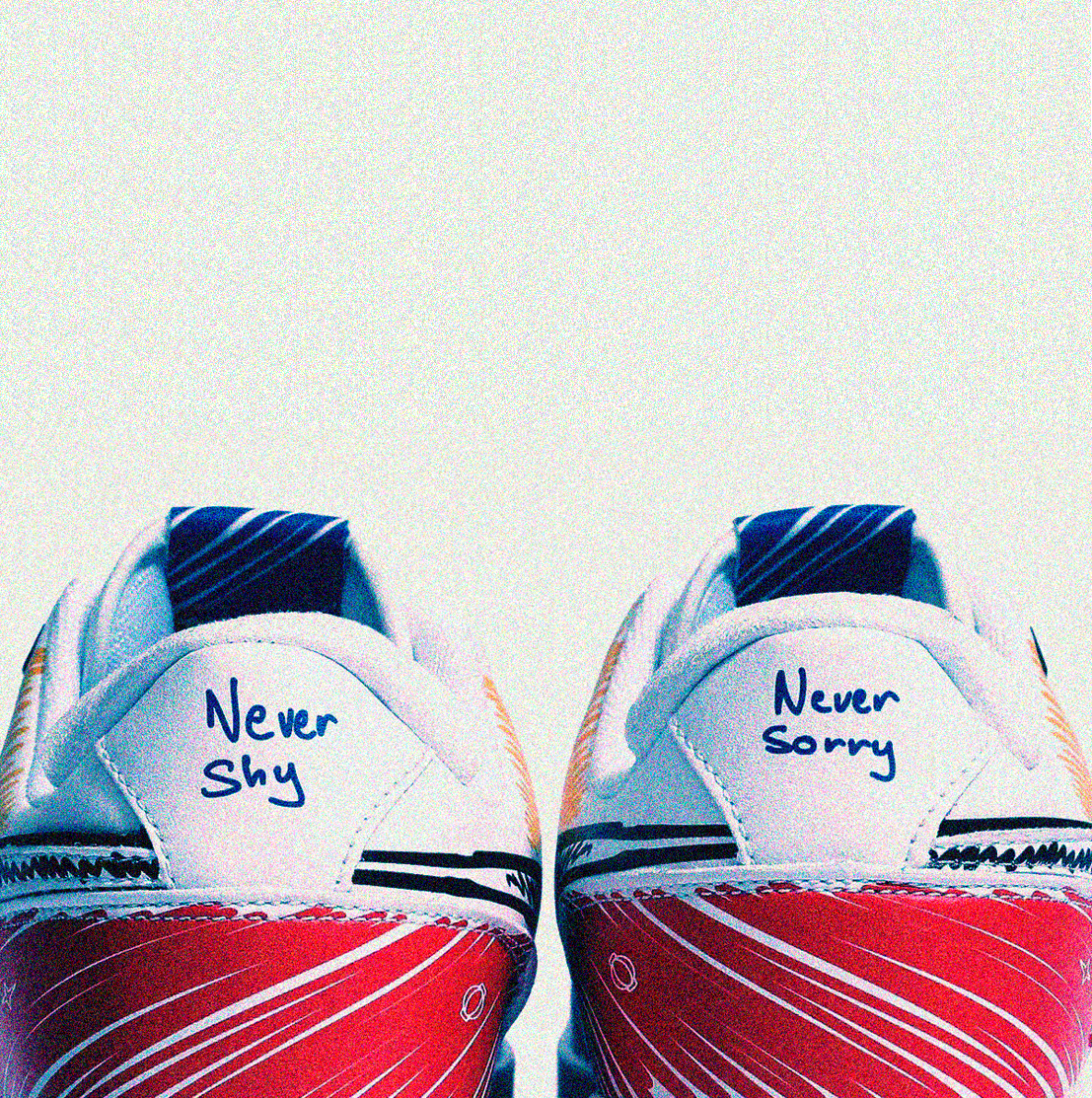
The heel tab, split across both feet to spell out “Never Shy” and “Never Sorry.”
And suddenly, it made sense.
“It’s the story,” he said. “It just… hits different.”
That one conversation sent me down a rabbit hole, not just into Comet’s world but into the larger question of how brands like these are managing to break through. In a space dominated by billion-dollar global giants, what does it take for a homegrown brand to carve out a niche?
And more importantly, can a good story really compete with decades of legacy?
The Business of Sneakers: India’s Billion-Dollar Boom
As of 2024, the sneaker industry in India generated a revenue of US$2.8 billion, with projections estimating it will reach US$3.55 billion by 2028, a 75% rise in just a decade. What was once considered a niche or luxury category has exploded into the mainstream, driven by a growing sneaker culture, increased spending power, and the global influence of streetwear.
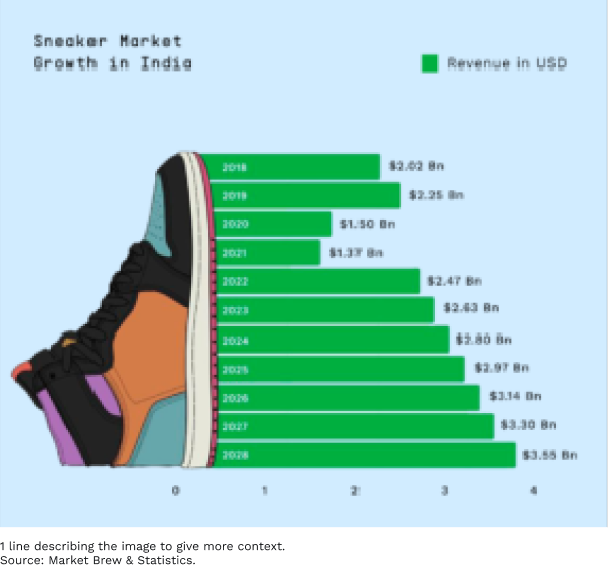
1 line describing the image to give more context. Source: Market Brew & Statistics.
For years, the space has been ruled by sneaker titans like Nike, Adidas, and Puma. Alongside them, several Indian brands have found success by catering to the mass segment, focusing on delivering good products at affordable prices. Amidst these two segments, a handful of homegrown names are quietly carving out their own space, not just through competitive pricing or quality, but by building deeper connections through cultural relevance and storytelling. These brands are beginning to define what sneakers can mean in the Indian context, turning footwear into an expression of identity. Take Gully Labs, for example. They’ve rooted their designs in the language of urban India, blending graffiti-inspired typography, bold colours, and details drawn from rickshaw art, street signs, and cityscapes. Through stories of young creators and street athletes, the brand
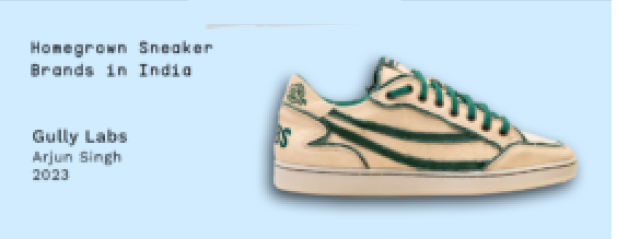
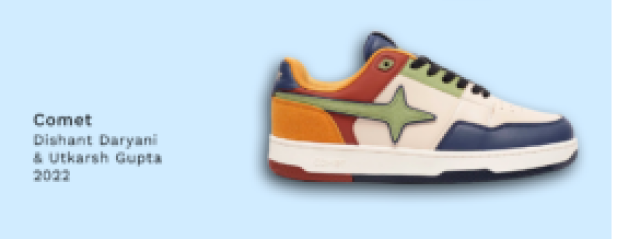
1/3 An annotation. Credits
Or Thaely, which has taken a different route altogether. Focused on sustainability, they craft minimal, futuristic sneakers entirely from recycled plastic bags and other waste materials. Backed by a strong environmental narrative, they appeal to conscious consumers who want their choices to reflect both innovation and impact. Joining this growing wave is Comet, a brand that’s quickly finding its footing with a distinct point of view. Rather than following established paths, Comet is carving out its own identity through a mix of bold design choices and purposeful storytelling. Since its inception in 2023, Comet has built its brand identity around themes of individuality, self-expression, and defiance of convention. The brand’s messaging, including its tagline “Never Shy, Never Sorry,” aligns with this positioning, targeting consumers who identify with a bold and unconventional approach to sneaker culture
“When I looked at the Indian market, I saw global brands treating it as an afterthought, offering spillover products without meaningful engagement.
Sneaker culture thrives on storytelling, and no one was doing that here. That inspired me to return and start Comet.”
Utkarsh Gupta
Co-founder Comet
Differentiation Through Brand Archetypes
To better understand how brands like Comet shape their identity, it’s useful to look at Brand Archetypes, a concept rooted in psychology that helps define the deeper personalities brands take on to connect with their audiences. The idea of archetypes comes from the work of psychologist Carl Jung, who identified recurring character types in stories and cultures throughout history. These archetypes tap into universal human emotions and desires, making them a powerful tool for brands looking to create lasting, meaningful relationships with their consumers. Over time, this theory has been adapted into what we now call the Brand Archetype Wheel, which maps out 12 core archetypes that brands typically fall into. Each archetype represents a distinct personality, voice, and motivation.
The Hero
Brave, determined, inspiring change.
The Outlaw
Rebellious, disruptive, challenging the status quo.
The Creator
Brave, determined, inspiring change.
The Sage
Rebellious, disruptive, challenging the status quo.
The Explorer
Brave, determined, inspiring change.
The Lover
Rebellious, disruptive, challenging the status quo.
The Jester
Brave, determined, inspiring change.
The Innocent
Rebellious, disruptive, challenging the status quo.
The Ruler
Brave, determined, inspiring change.
The Caregiver
Rebellious, disruptive, challenging the status quo.
The Everyman
Brave, determined, inspiring change.
The Magician
Rebellious, disruptive, challenging the status quo.
By identifying which archetype a brand aligns with, they can build stronger, more consistent messaging and emotional resonance.
Mapping Homegrown Sneaker Brands on the Archetype Wheel
Gully Labs and Thaely occupy distinct archetypal spaces shaped by their brand narratives. Gully Labs aligns with The Jester, embracing playful, expressive design inspired by street culture; graffiti-style typography and urban Indian elements that emphasize creativity and self-expression. Thaely, on the other hand, embodies The Caregiver, prioritizing sustainability, responsible manufacturing, and environmental impact, positioning itself as a brand rooted in protection and social responsibility. Comet stands apart as The Outlaw, built on themes of non-conformity and individualism. Its bold design details and messaging reinforce a defiant, independent mindset, appealing to those who reject convention in favor of self-expression.
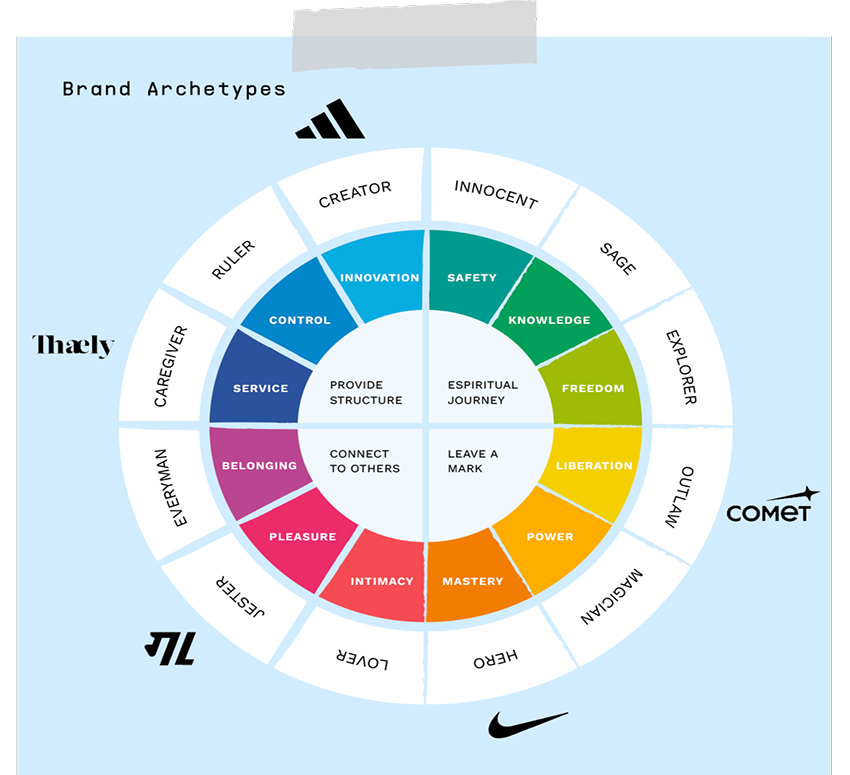
Globally, brands like Nike and Adidas have long established themselves within archetypes such as The Hero and The Creator – Nike inspiring action, achievement, and perseverance, while Adidas often leans into innovation through sport and design. In contrast, homegrown brands like Comet, Gully Labs, and Thaely have deliberately occupied alternative archetypal spaces, offering fresh, differentiated narratives to the Indian consumer. This strategic distinction is where they are finding their edge, by addressing cultural, social, and emotional needs that global players have often overlooked in the local context.
How Comet is Bringing the Outlaw Archetype to Life
Design
Comet’s commitment to non-conformity is embedded in its design. Bold details like the solar system graphic on the sole and asymmetrical heel tabs reinforce its rebellious ethos. But the storytelling isn’t just visual—it extends to the very foundation of the shoe. Comet developed proprietary sole molds for better durability and comfort, as well as a unique design language, unlike many Indian brands that use mass-produced TPR soles. With a wider toe box designed for Indian feet, Comet blends function with cultural intuition. By weaving its narrative into every element, the brand ensures its sneakers are more than just footwear, they’re statements of individuality.
Product
Comet’s product strategy is built on storytelling-driven drops that resonate with Indian culture while maintaining an edgy, non-conformist appeal. The Mango sneakers, shipped in a box filled with hay, tapped into nostalgia, while the Ludo drop paid homage to a classic childhood game. This unique approach not only differentiates Comet but also drives demand, with each drop selling out in hours. The brand’s distinct storytelling has translated into strong financial performance, generating INR 7.86 Cr in revenue in FY 2023-24 within 2 years of setting up shop.
Marketing
Comet’s marketing strategy reinforces its identity through transparency and community-driven engagement. The brand openly shares archived projects on social media, offering followers a behind-the-scenes look at its creative process. Additionally, Comet highlights its global community of ‘Cometeers,’ showcasing customers from around the world wearing their sneakers. The above combination of culturally aware product storytelling and controlled, community-driven marketing has helped Comet carve out a distinct space, swiftly moving to a valuation of INR 160 Cr in a relatively short period of time.
The Impact of a Strong Brand Narrative
A compelling brand story plays a crucial role in differentiating a brand in a competitive market. Established global brands like Nike have demonstrated how storytelling can drive long-term loyalty. Other brands, such as Patagonia, have built loyal communities by aligning their values with those of their audience. Indian brands like Comet, Gully Labs, and Thaely are now leveraging this approach to build their own communities and market presence. This week, I bought myself a pair of Comet sneakers, the Hazelnut ones. When I met a friend, he glanced at my shoes and asked, “What are those?” And just like that, I found myself telling the story about the solar-system-inspired sole, the split heel tab, and the feeling that made it stand out. In that moment, I realized: a great story doesn’t just sell a product, it gets passed on.
CONTINUE EXPLORING
Beyond the Sole
How Storytelling is shaping sneaker culture.
March 2020
Beyond the Sole
How Storytelling is shaping sneaker culture.
March 2020

Beyond the Sole
How Storytelling is shaping sneaker culture.
March 2020
Beyond the Sole
How Storytelling is shaping sneaker culture.
March 2020
Beyond the Sole
How Storytelling is shaping sneaker culture.
March 2020